Hedge Cutting in Autumn: Why September and October Are Peak Season in Nottinghamshire
Hedge cutting in autumn in Nottinghamshire: timing, legal rules, and how FitBoys Gardening keeps Newark hedges in peak condition all year round.

Autumn Is the Right Time to Get Your Hedges Sorted
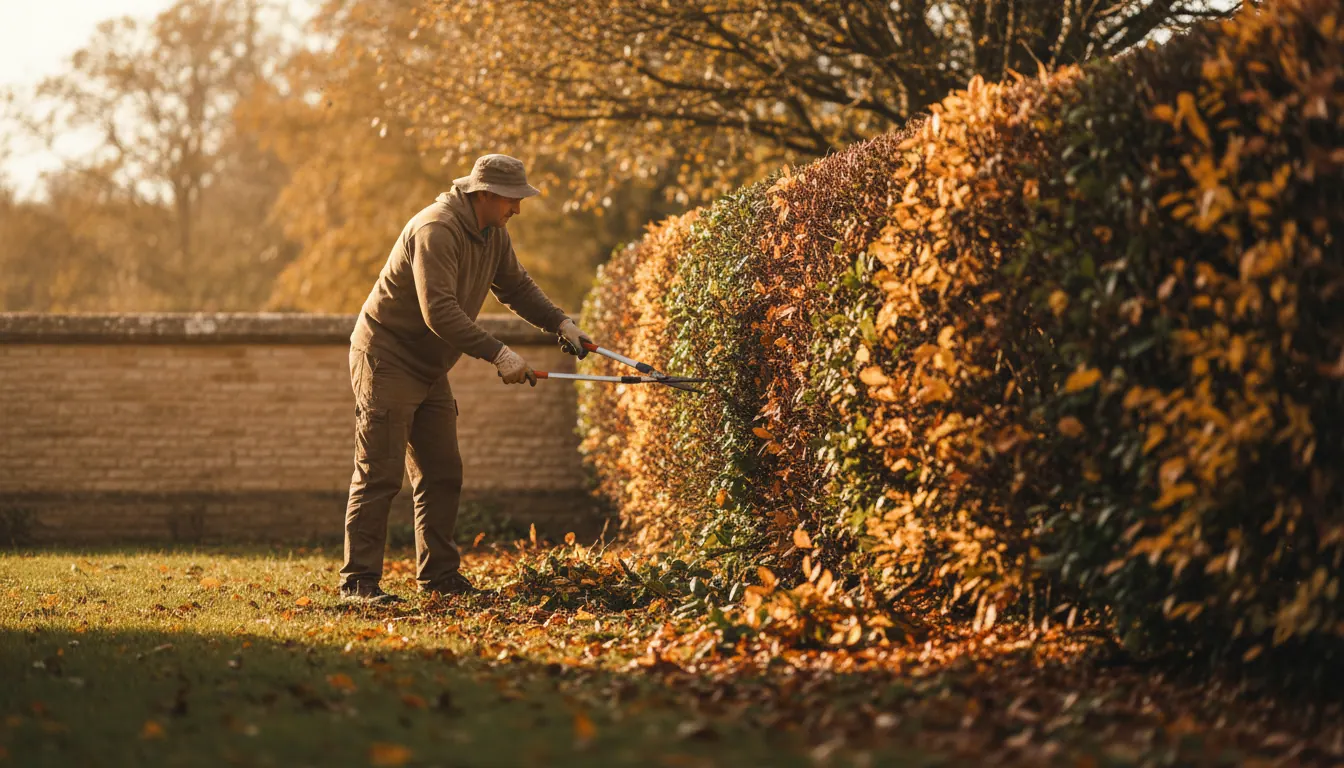
Leaves are starting to turn, the nesting season is well and truly over, and your hedges are probably looking a bit wild after a summer of growth. Autumn is one of the best windows in the gardening calendar for hedge cutting in Nottinghamshire, and if you miss it, you are looking at a harder job come spring.
We work across Newark-on-Trent and the surrounding villages every week, and this time of year our schedule fills up fast. Homeowners, landlords and people who have just moved into a property with overgrown boundaries all want the same thing: hedges brought back under control before the cold sets in. This article covers the timing, the rules, the different hedge types we deal with, and what a proper autumn cut actually involves.
Why Autumn Hedge Cutting Makes Sense
A hedge cut in late summer or autumn achieves two things at once. First, it tidies up the season's new growth before the plant goes dormant. Second, it sets the hedge up to break cleanly in spring rather than pushing out in all directions from an untidy base.
For most species common to Newark gardens and the Nottinghamshire countryside, growth slows noticeably from September onwards. That makes the cut cleaner and the recovery more predictable. You are not fighting the plant; you are working with its natural rhythm.
There is also a practical reason. A tidy hedge going into winter is easier to manage than one left to its own devices until March. Wind and frost can cause dieback on long, uncut stems. Getting the job done now means less remedial work later.
The Legal Rules Around Hedge Cutting: What You Need to Know
This is the question we get asked more than any other, so let us be straightforward about it.
The nesting season runs from 1 March to 31 August. During this period, cutting hedges that contain active bird nests is an offence under the Wildlife and Countryside Act 1981. The law does not ban hedge cutting outright during those months, but it does require you to check for active nests before you start. If a nest is in use, you leave it alone until the birds have finished.
From September onwards, you are generally in the clear. Autumn hedge cutting is not illegal. In fact, the September to February window is the recommended period for most significant cutting work, including height reductions and hard reshaping.
A few things worth noting:
- If your hedge borders a public highway, you may need to check with Nottinghamshire County Council about any local requirements for sight-line maintenance.
- Hedges on listed properties or within conservation areas may be subject to additional planning conditions. If in doubt, check with Newark and Sherwood District Council before undertaking major work.
- The nesting season rules apply regardless of the species. A privet hedge in a Newark back garden is subject to the same checks as a rural hedgerow.
There are no new blanket UK-wide hedge cutting laws coming into force in 2026 that change the core position above. The Wildlife and Countryside Act remains the key piece of legislation, and the March to August nesting period remains the period to treat with care.
Which Hedges Are We Talking About?
Not all hedges behave the same way, and the timing of your cut can vary slightly by species. Here is how we approach the main types we deal with across Newark and the surrounding villages.
Privet. Fast-growing and often neglected until it has doubled in width. Autumn is an excellent time for privet, including width reductions on hedges that have spread far beyond their original footprint. We have written more about this in our article on overgrown privet hedges and why width reduction matters more than height.
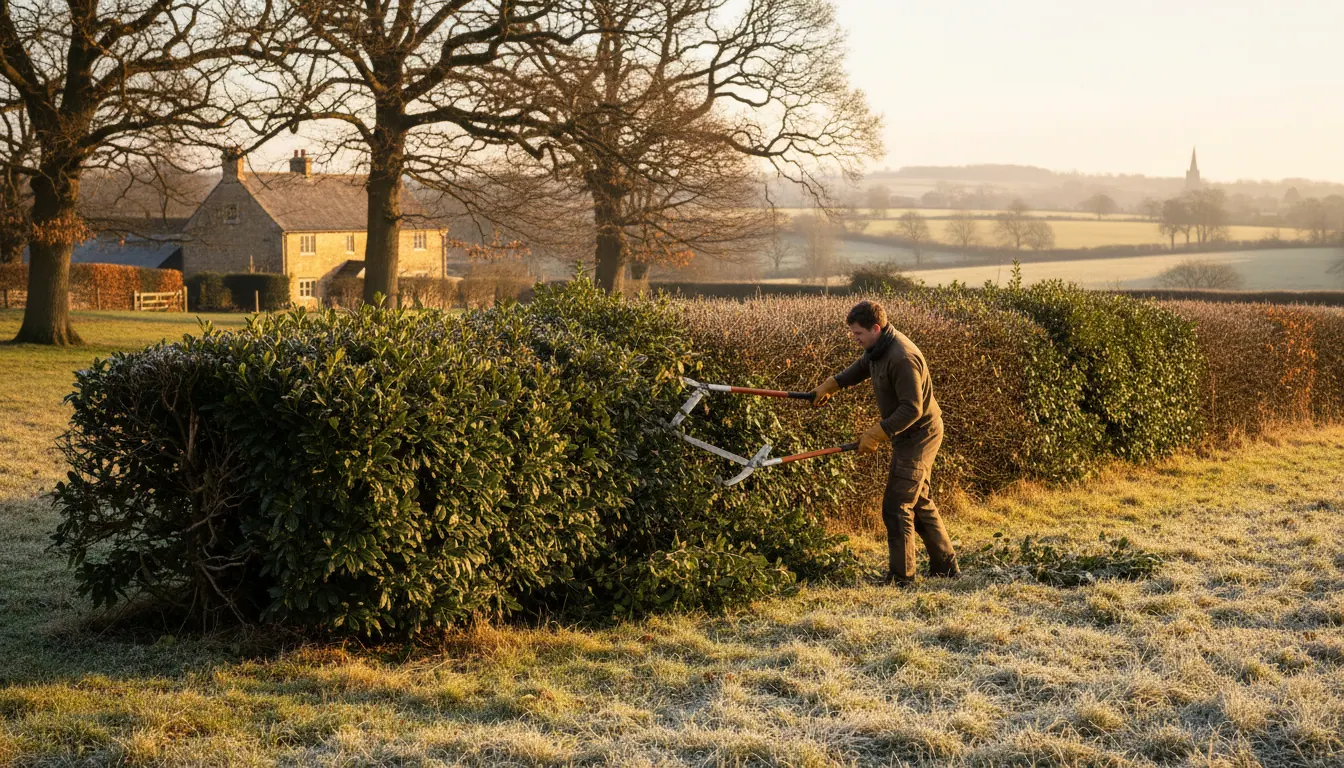
Laurel. A tough, vigorous plant that can become enormous if left unchecked. We use secateurs or loppers rather than a flail trimmer on laurel wherever possible, to avoid the ragged brown cuts that a rotary blade leaves on the large leaves. Autumn is a good time, though we avoid cutting too late in the season if a hard frost is forecast immediately after. More detail on laurel timing is covered in our guide to conifer and laurel hedge trimming.
Conifer (Leylandii, Thuja, Cupressus). These need careful handling. Conifers do not regenerate from brown wood, so you can only cut back to where there is still green growth. We do not take conifers back hard in one go unless the customer has accepted that the result will be brown patches for a period. Light to moderate trimming in early autumn, before the coldest weather arrives, is the sensible approach.
Yew. One of the most forgiving species for hard cutting. Yew can be reduced significantly and will push back from old wood. September and October are good months for yew work.
Beech and hornbeam. These hold their dead leaves through winter if cut in late summer to early autumn, which many customers actually prefer for privacy. Cut too late and you lose that benefit.
What a Proper Autumn Hedge Cut Involves
There is a difference between a quick trim and a job done properly. When we arrive at a property in Newark or one of the surrounding villages, here is what the work actually looks like.
Assessment first. We look at the height, the width, the shape, and the condition of the plant. If there is significant dieback or the hedge has been neglected for years, we discuss realistic outcomes with the customer before we start.
Height and width, not just height. Most hedges that have been left to grow do not just get taller; they get wider. A hedge that has pushed out by half a metre on each side is encroaching on paths, borders and sometimes driveways. We address both dimensions as standard.
Clean cuts, clean site. All arisings (the cut material) are cleared and taken away as part of the job. We do not leave piles of trimmings on your lawn or stack them against the fence.
Edges and borders. After the hedge itself, we tidy the base. A clean line at the bottom of a hedge makes the whole garden look sharper.
What Our Customers Say
We let the work speak for itself, but it is good to know what people who have used us actually think.
Charlie has done several jobs for us in the last year. Large lawns cut, big hedges trimmed and our long driveway cleared. He is friendly, punctual and always does an excellent job. Thanks Charlie!
That is Sara Bainbridge, a customer who has had us back repeatedly across different jobs. Consistency matters. A garden does not get into peak condition from one visit; it gets there from regular, reliable attention.
Regular Maintenance vs. One-Off Cuts
Some customers want us once a year for a big tidy-up. Others prefer a regular slot, weekly, fortnightly or monthly, so the garden never gets to the point where it needs heavy remedial work. Both approaches work, and we are happy with either.
If you have a property you are letting, or you have recently moved into a house with an overgrown plot, a one-off clearance is often the right starting point. We can assess what is there, bring everything back under control, and then discuss whether a maintenance schedule makes sense going forward. Our article on garden clearance after moving house covers that scenario in more detail.
Frequently Asked Questions
Is it okay to trim hedges in autumn in Nottinghamshire? Yes, absolutely. The September to February window is one of the best periods for hedge cutting. The nesting season is over, growth has slowed, and the plant is heading into dormancy, which means it recovers well from cutting. For most species common in Newark gardens and across Nottinghamshire, autumn is the ideal time for both routine trimming and more significant reductions.
What months should I avoid cutting hedges? The period to treat with caution is 1 March to 31 August, when birds may be nesting. You are not legally banned from cutting during these months, but you must check for active nests first. Cutting a hedge with an active nest inside is a criminal offence under the Wildlife and Countryside Act 1981. Outside that window, from September through to February, there are no nesting restrictions.
Is it illegal to cut hedges in the UK right now? No. Hedge cutting is legal throughout the year provided you follow the nesting season rules described above. There is no general ban on hedge cutting in the UK. From September onwards, you are free to cut without the nesting season concern. If your hedge is on or near a listed structure, or in a conservation area, check with your local council before undertaking major work.
Are there any new hedge cutting rules coming in 2026? There are no new blanket UK-wide rules changing the fundamental position on hedge cutting that are due to come into force in 2026. The Wildlife and Countryside Act 1981 remains the primary legislation. If specific local or agricultural hedgerow regulations are updated, Nottinghamshire residents should check with Natural England or Newark and Sherwood District Council for the latest position relevant to their specific land or property.
Get Your Hedges Sorted Before Winter
Autumn moves quickly. Once the frosts arrive and the days shorten, outdoor work becomes harder and the window for the best results narrows. If your hedges in Newark, Southwell, Balderton, Collingham, Farndon or anywhere else across Nottinghamshire need attention, now is the time to book.
We are fully insured, we take all waste away, and we work to a standard we are genuinely proud of. If you want a straight-talking team who will turn up on time and do the job properly, call us on 07704 442169 and let us get your hedges into shape.